Agentic AI Recruitment vs Basic Automation: What Actually Changes
Answer in brief
Basic automation speeds up tasks and still needs a recruiter at every handoff. Agentic AI runs the hiring process. Here is the workflow and the ROI difference.
Agentic AI recruitment uses multiple specialised AI agents that pass information between each other to run the whole hiring process, from resume screening through onboarding. Basic automation tools speed up individual tasks and stop whenever a situation falls outside their preset rules, which leaves a recruiter to bridge every gap.
Basic automation does not eliminate administrative work. It moves the recruiter's focus from hiring people to managing software.
A basic screening tool rejects a qualified "Content Writer" applying for an "SEO Content Writer" role, because it looks only for exact keyword matches.
When a candidate reschedules at the last minute, an agentic system checks the interviewer's calendar, books a new slot and updates the invite without a recruiter touching it.
Consolidating screening, scheduling and proctoring into one platform lowers subscription costs and removes the burden of building and maintaining custom API integrations.
High application volumes outpace a recruitment team's capacity to evaluate candidates at scale. Teams turn to automation. Most platforms claim complete automation and still require human intervention at every stage to keep candidates moving. That limitation, in a crowded software market, makes selection difficult.
Agentic AI is software composed of multiple agents that each hold a specialised job, act autonomously within it, and hand results to each other without a human coordinating the handoff.
Where do basic automation tools break?
They break wherever the situation requires judgement, because they operate strictly on preset conditions.
Most hiring automation manages simple, repetitive tasks: sorting resumes, triggering status updates. It cannot analyse context, evaluate nuance or adapt in real time.
Take a basic screening tool evaluating applicants for an "SEO Content Writer" role. It automatically rejects a qualified "Content Writer" because it looks only for exact keyword matches, and misses that the writer's experience section describes the required search engine optimisation skills throughout.
That gap sends the recruiter back into the work. They audit the rejected applicant pool, copy details into spreadsheets and coordinate schedules across separate email accounts and calendars. The administrative work has not gone anywhere. It has changed shape.
How is agentic AI different?
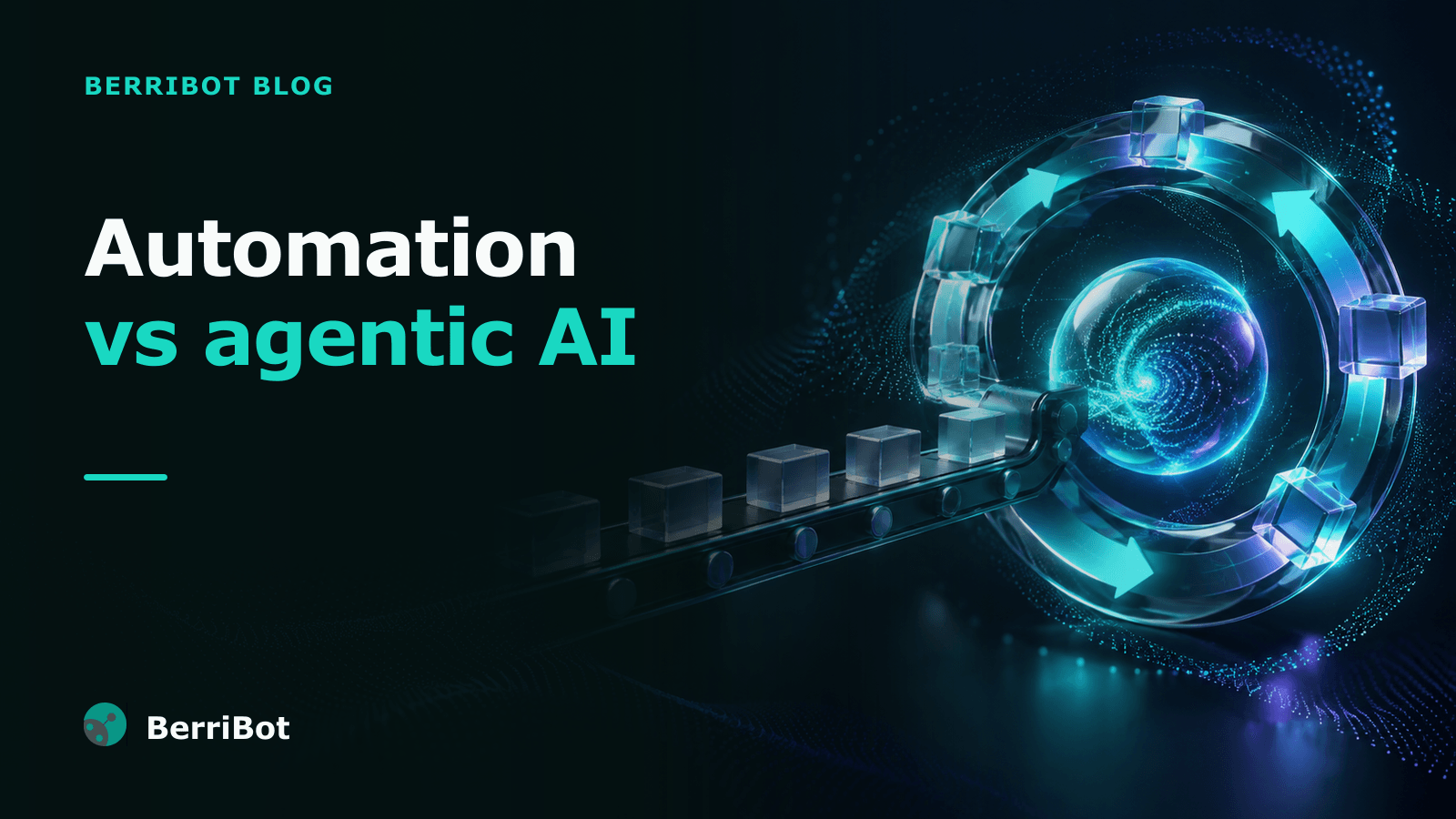
Basic automation solves at task level, so teams end up with one tool per stage. Agentic AI runs the stages as one system.
Teams using point tools need software to parse resumes, more software to trigger emails, and a third product to coordinate calendars. An agentic platform uses multiple agents that work together to run the whole process: resume screening, candidate outreach, interview scheduling, assessment proctoring and ongoing communication through to onboarding.
Instead of stalling when plans change, the agents pass information back and forth. If a candidate reschedules a technical interview at the last minute, the scheduling agent checks the interviewer's calendar, books a new slot and updates the invite. The conflict resolves without a recruiter managing an email chain.
Basic automation
Agentic AI
Decision model
Preset rules
Contextual analysis and autonomous action
Coverage
One tool per stage
One system across all stages
When plans change
Stalls, waits for a human
Resolves and continues
Recruiter's role
Bridge between systems
Final hiring decision
Data handoffs
Manual
Automatic between agents
Vendor count
Several
One
What does the end-to-end agentic workflow look like?
Seven steps, starting from a job description and ending at onboarding, with the hiring team involved once.
Setup. A recruiter uploads a job description and connects the platform to their ATS or resume database. From there the system manages the pipeline without further configuration.
Contextual screening. The platform evaluates applications immediately, reading resumes for actual capability rather than exact phrases, so a candidate with the right development experience is not rejected for missing a trending keyword.
Outreach. It contacts qualified candidates to confirm interest, verify total experience, and collect notice periods and compensation expectations.
Scheduling. Once the candidate confirms availability, the interview is booked automatically.
Adaptive interview. The platform runs 24/7 interviews evaluating technical expertise, behavioural traits and core competencies in real time, adjusting question difficulty and direction based on live responses.
Proctoring. Integrated AI proctoring monitors the assessment and flags cheating attempts as they happen.
Decision and onboarding. Hiring teams receive a ranked list with detailed scorecards. After selection, the platform handles post-offer communication, following up on offer acceptance and document submission.
The continuity is also what improves candidate experience. Applicants do not log into several platforms or wait weeks for a status update. They ask about the role or the timeline and get an immediate answer.
ATS stands for Applicant Tracking System, the database of record most organisations use to store applications and track candidates through hiring stages.
Does agentic AI remove human judgement from hiring?
No. It concentrates human judgement at the final decision, where it changes the outcome.
The system handles high application volumes independently, so hiring managers review a curated shortlist of verified candidates. Each recommendation comes with a summary explaining why the individual was recommended, which keeps the evaluation merit-based and reviewable.
With the logistical overhead removed, recruiters assess cultural alignment and hold the conversations that decide the hire.
What administrative work actually disappears?
The coordination layer between stages, which is the part recruiters do not see on any tool's feature list.
Basic automation leaves the workflow unchanged. Because the tools operate in isolation, recruiters act as the bridge, transferring data between systems. They chase candidates who have not completed profiles, send routine updates and copy assessment scores into the ATS.
Agentic AI removes that layer. The moment a candidate passes screening, the system handles outreach and books the interview. If the applicant does not complete the test in the expected window, the system sends a follow-up reminder and brings them back.
Recruiters stop auditing stalled applications and managing software logistics, and spend the time on behavioural evaluation, compensation strategy and closing candidates.
What is the measurable ROI?
Three effects, and the third one shows up on the software bill rather than the hiring dashboard.
Effect
Mechanism
Time-to-hire falls sharply
Applications are processed and candidates advanced instantly, so top talent moves through the pipeline before competitors respond
Candidate drop-off falls
Removing multi-portal fragmentation creates a frictionless experience, which matters most for mobile users who abandon when forced to switch between browser windows or apps
Software overhead drops
One platform replaces standalone screening, scheduling and proctoring tools, lowering subscriptions and removing the burden of building, testing and fixing custom API integrations
What is the takeaway?
Basic automation handles repetitive tasks and depends on human intervention at each stage. Scaling hiring without adding administrative overhead requires systems that manage the whole workflow independently.
Agentic AI removes the friction points, which lets organisations expand recruitment capacity, evaluate capability accurately, and improve the hiring experience. Berri 360 is BerriBot's agentic AI recruitment platform built for that end-to-end workflow, with the team stepping in for the final hiring decision.
Frequently asked questions
What is agentic AI recruitment?
Agentic AI recruitment uses multiple specialised AI agents that each own a stage of hiring and pass information between each other, covering screening, outreach, scheduling, interviewing, proctoring and post-offer communication without a recruiter coordinating the handoffs.
How is agentic AI different from recruitment automation?
Automation executes preset rules and stops when a situation falls outside them. Agentic AI analyses context and acts. The practical difference appears when plans change: automation stalls and waits for a recruiter, while an agentic system resolves the conflict and continues.
Can agentic AI handle an interview reschedule on its own?
Yes. When a candidate reschedules at the last minute, the scheduling agent checks the interviewer's calendar, books a new slot and updates the calendar invite. No recruiter manages the email chain.
What does the full agentic hiring workflow cover?
A recruiter uploads a job description and connects the ATS. From there the system screens contextually, contacts qualified candidates, collects notice period and compensation details, schedules the interview, runs an adaptive interview with integrated proctoring, delivers ranked scorecards, and handles post-offer follow-up through onboarding.
Does agentic AI replace recruiters?
No. It handles the volume and the coordination so hiring managers review a curated shortlist with the reasoning attached. Assessing cultural alignment, shaping compensation and closing the candidate remain human work.
What is the ROI of moving from point tools to an agentic platform?
Time-to-hire falls because candidates advance instantly rather than waiting on manual handoffs. Candidate drop-off falls because the experience stops being fragmented across portals, which matters most on mobile. Software cost falls because one platform replaces separate screening, scheduling and proctoring subscriptions and their integrations.
Why does keyword screening fail on an "SEO Content Writer" role?
Because it looks for the exact phrase. A qualified Content Writer whose experience section describes search engine optimisation work throughout is rejected for not carrying the literal job title, which then forces a recruiter to audit the rejected pool by hand.
Next step: Watch a real interview run inside the end-to-end workflow. Book a demo