Machine Candidates: What They Are and How to Screen
Jul 10, 2026
Machine Candidates: What They Are and How to Hire Around Them
Answer in brief
Gartner defines machine candidates as autonomous AI agents job seekers deploy to apply at scale. Here is why blocking them backfires and what to change instead.
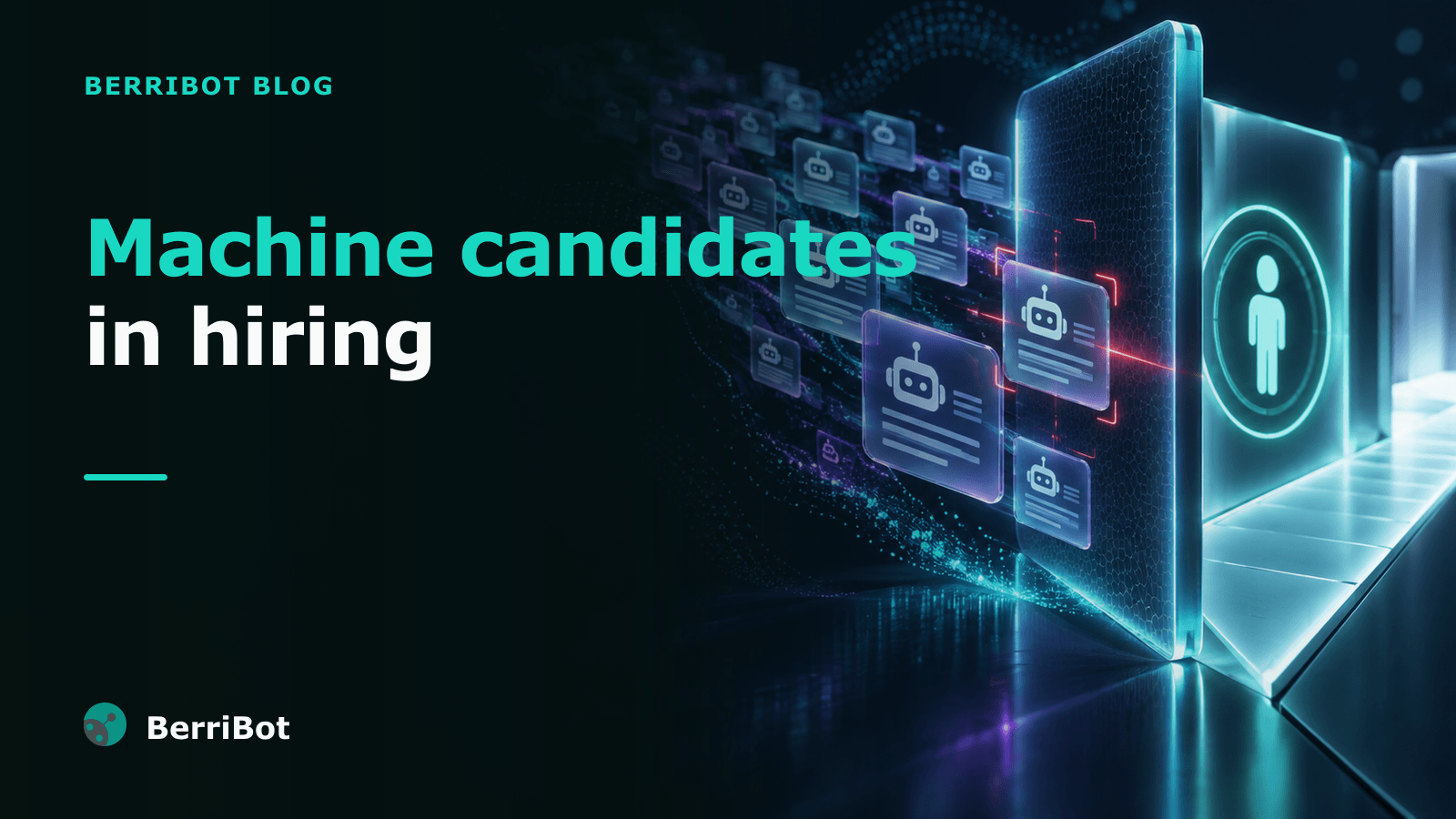
Gartner defines machine candidates as autonomous AI agents deployed by job seekers to manage the application process. They find open roles, rewrite resume text to match job requirements and submit applications. Some monitor inboxes, reply to scheduling requests and complete text-based screening on the applicant's behalf.
AI usage in hiring is no longer one-sided. Talent acquisition teams and candidates both use agents now.
Commercial AI job-search agents are available off the shelf, and general coding platforms let candidates build custom scrapers with simple text commands.
Blocking AI agents from a careers site removes your listings from the searches many skilled professionals now run.
35% of hiring managers have confirmed that someone other than the applicant showed up to an interview.
For years, organisations used software to filter applicants. Now applicants use software to automate their job searches and apply at scale. The response is not to block the technology. It is to change what you evaluate.
A machine candidate is an autonomous AI agent a job seeker deploys to find roles, tailor their resume and submit applications, and in some cases to handle scheduling and early screening on their behalf.
What do machine candidates actually do?
They cover the administrative half of the candidate journey, and increasingly the first conversational stage.
Machine candidates monitor inboxes, reply to scheduling requests and answer text-based screening questions. Some advanced agents use voice synthesis to complete preliminary phone screens, which leaves the job seeker detached from the early phases entirely.
The technical barrier has fallen. Commercial AI job-search agents are sold off the shelf. For unusual requirements, general coding platforms let candidates write scripts that scrape specialised job boards and auto-fill corporate application forms. Building an application bot once required real programming. It now requires text commands.
Because they take almost no effort to launch, usage keeps rising, and employers receive thousands of resumes with nearly identical phrasing. Perfectly optimised resumes strip out the traditional signals of applicant intent and capability, which makes finding genuine talent harder.
Why are job seekers using AI agents?
Because the market conditions that produced them have favoured employers for years, and automation is the candidate's response.
Organisations send mass rejections without specific feedback, or stay silent entirely after receiving applications. Candidates find little reason to spend hours tailoring individual applications.
Automation scales their effort with minimal exertion and raises the probability of a response from a hiring team already handling high volume. Candidates also know that employers use algorithmic screening, so they use AI to optimise resumes and match keywords to pass the digital filters.
Everyday habits accelerate it. People already use autonomous agents to buy products and summarise documents. Professionals apply the same habit to their careers, delegating role discovery and form-filling so they can concentrate on live interviews.
How do high application volumes slow hiring down?
Because every resume looks flawless, so the resume stops being a filter and the whole pipeline widens.
When machine candidates apply at scale, employers face a massive influx. AI-optimised resumes align with the job description by design, which makes identifying qualified applicants from resumes alone difficult.
Should we block AI agents from our careers site?
No. Blocking them removes your listings from the searches many skilled professionals now run.
Many capable professionals use agents to search the internet for open roles. A careers page that blocks agents will not appear in those searches. Keeping the site open to agents is now part of attracting top talent.
That means handling applications from both people and agents, and changing how you screen at the start of the process. Hiring teams need clear rules for how their platforms distinguish genuine capability from candidates using agents to mimic it.
How is AI accelerating deception in remote interviews?
By making identity and location easy to falsify, and by putting deepfakes within reach for video interviews.
As remote interviews became common, fraud attempts rose. Candidates use AI to falsify identities and hide locations, and in extreme cases to run deepfakes during video interviews.
Traditional background checks arrive too late. They happen after the company has already spent time and money on interviews.
Candidate impersonation detection software runs during the interview instead. It combines biometric identification with liveness checks to confirm identity, and location tracking to show whether an applicant is masking their network address. Stopping fraud at that point keeps honest applicants from being displaced by deceptive ones.
Proctoring has to be used carefully. Applicants abandon applications when tracking feels invasive, so integrity and candidate experience have to hold together.
What should change in your hiring process?
Three things: a published AI policy, live skill tests instead of resume trust, and human judgement at the final decision.
What a machine candidate can do
What it cannot fake
Resume and cover letter
Produce a tailored, keyword-perfect version in minutes
Nothing. Treat the document as unverified
Form filling and scheduling
Complete automatically
Nothing. This is fine to allow
Text screening questions
Answer on the applicant's behalf
Nothing. Do not weight it heavily
Live problem-solving on an unfamiliar task
Assist, if undetected
The candidate's own reasoning under real-time probing
Identity in a proctored interview
Attempt impersonation or deepfake
Biometric identity plus liveness plus location consistency
Set clear boundaries for applicant AI usage. State which AI tasks are acceptable and which are forbidden. Legal teams should build these guidelines with recruitment, and the guidelines should be published in plain language directly on the careers page. Sharing expectations openly removes confusion for applicants, sets a standard of conduct from the moment someone applies, and gives the company a consistent framework for disqualification if the rules are broken.
Swap flawless resumes for hands-on skill tests. Since AI writes resumes and cover letters perfectly, they no longer identify the best candidates. Ask applicants to complete specific tasks during the interview. Live problem-solving shows whether someone can solve complex problems independently and how they handle unexpected challenges. The assessments have to match the actual day-to-day responsibilities of the role, which also gives both sides a realistic view of the job. For genuine talent, competence-based hiring is a better experience, because it rewards proven skill over an optimised document.
Keep final hiring decisions human. AI agents will keep automating the administration of hiring: managing data, scheduling meetings, verifying documents. They cannot determine how a candidate aligns with an organisation, and they cannot evaluate cultural fit or shared values. Agents can screen and recommend. People should decide.
Evaluators should also reframe how they judge a candidate's use of AI. Fair use of technology is a signal of adaptability and a desire to work efficiently with modern tools. Channel it constructively rather than penalising it, because workplace skills are changing faster than ever.
Frequently asked questions
What is a machine candidate?
Gartner defines machine candidates as autonomous AI agents deployed by job seekers to manage the application process. They find open roles, modify resume text to match job requirements and submit applications, and some also monitor inboxes, reply to scheduling requests and answer text-based screening questions.
Should companies block AI agents from their careers pages?
No. Many skilled professionals now use agents to search for roles, so a careers page that blocks agents will not surface in those searches. Keeping the site open is part of attracting talent. The change belongs in how you screen, not in who you let in.
Why are candidates using AI to apply for jobs?
Because employers have sent mass rejections without feedback or stayed silent entirely for years, so tailoring individual applications offers a poor return. Automation scales candidate effort cheaply and improves the odds of a response. Candidates also know employers use algorithmic screening, so they optimise to pass it.
How do you screen candidates when every resume looks perfect?
Stop treating the resume as evidence. Move evaluation to live, hands-on tasks that mirror the role's day-to-day responsibilities, and probe the candidate's reasoning in real time. Live problem-solving shows independent capability and how someone handles an unexpected challenge.
What should a candidate AI usage policy say?
Which AI tasks are acceptable and which are forbidden, written in plain language and published directly on the careers page. Legal and recruitment should draft it together. A published policy removes ambiguity for applicants and gives the company a consistent basis for disqualification.
How do you detect impersonation in a remote interview?
With candidate impersonation detection that runs during the interview rather than after it. It combines biometric identification with liveness checks to confirm the person is the applicant, and location tracking to reveal a masked network address. Background checks catch this too late to be useful.
Should candidates be penalised for using AI during hiring?
Fair, disclosed use of AI is a signal of adaptability rather than a red flag. What matters is the boundary: automation of administration is reasonable, and misrepresentation of capability or identity is not. Publish the line, then evaluate against it.
Next step: See how identity verification runs inside the interview rather than after the offer. See how verification works