Outcome-Based Hiring: What It Is and Why Teams Switch
Jul 27, 2026
Outcome-Based Hiring: What It Is and Why Recruitment Teams Are Switching
Answer in brief
Outcome-based hiring evaluates candidates on verified skill execution instead of application volume. Here is how it works, stage by stage, and what it fixes.
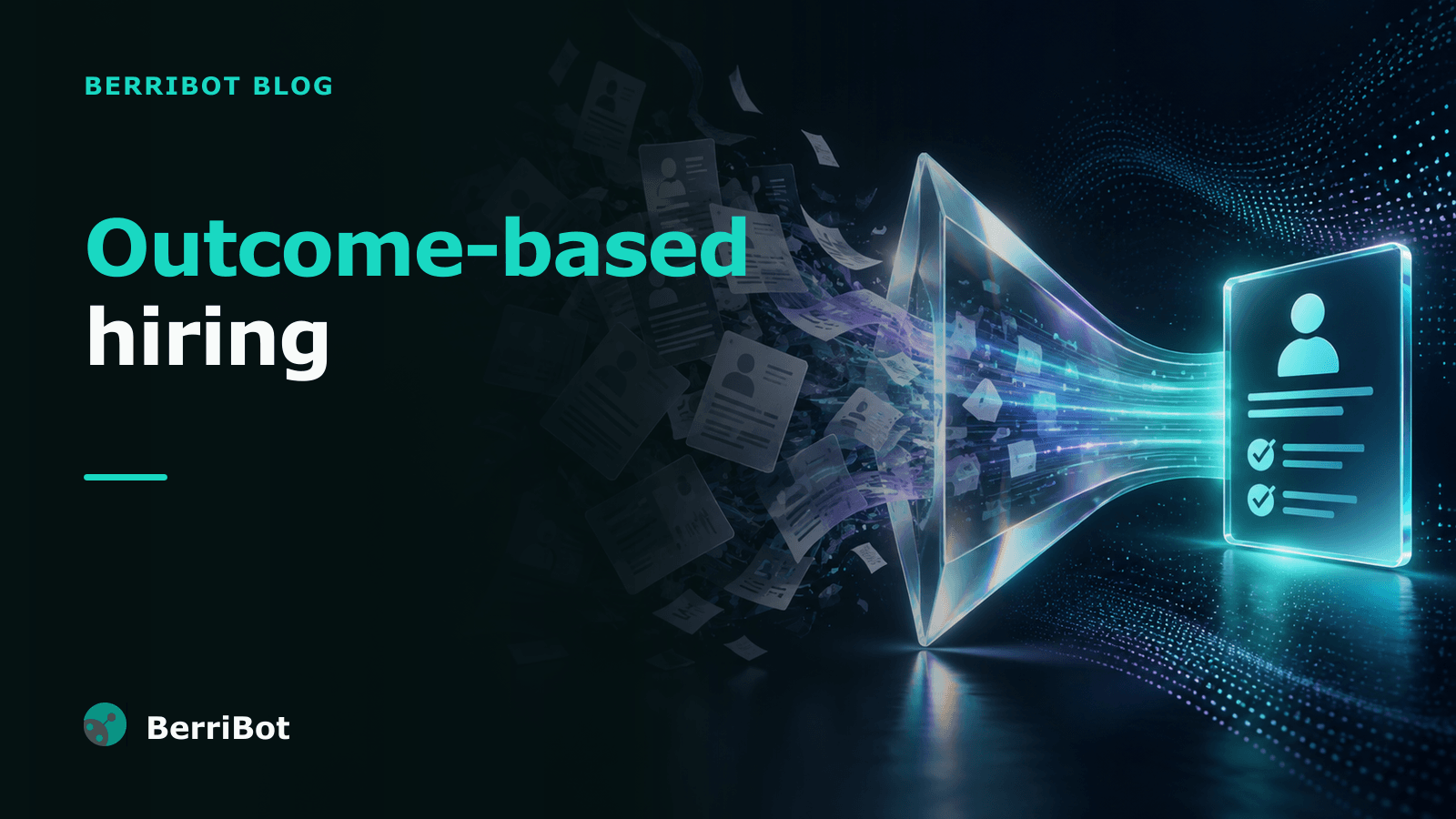
Outcome-based hiring is a recruitment strategy that evaluates candidates on their ability to perform the job's real responsibilities, rather than on how closely a resume matches a job description. It replaces application volume with verified skill execution, which reduces mis-hire risk and improves quality of hire.
74% of employers admit to hiring the wrong person.
Only 26% of applicants trust AI to evaluate them fairly, which makes completion rate the number to watch.
Generative AI lets candidates produce tailored, keyword-perfect resumes in minutes, so keyword filters no longer separate qualified from unqualified.
Outcome-based hiring changes four stages: screening, communication, assessment structure, and assessment integrity.
Consider a recruitment team that closed forty technical vacancies in under twenty days. On the internal hiring dashboard, the team beat its deadline. Six months later, project deadlines slipped, core team productivity dropped, and several of those new hires left. The process was fast. It never established whether the people hired could do the work.
Why does volume-driven hiring no longer work?
Volume-driven hiring stopped working because sourcing is no longer the bottleneck.
The strategy made sense when a job posting reached a limited audience. Collecting more applications genuinely improved the odds of finding the right person inside the pool.
That assumption broke. Generative AI tools let a candidate produce a polished resume and auto-apply to hundreds of roles within minutes. Recruitment teams now receive a continuous inflow of look-alike, unqualified resumes for every open role.
Volume-driven workflows were never built for that inflow. Recruiters end up consumed by repetitive administrative work, spending hours reviewing irrelevant applications.
How does volume-driven hiring fail at each stage of the pipeline?
It fails at screening, at interview, and at candidate experience, and each failure feeds the next.
Screening. Keyword filters look for exact text matches between a job description and a resume. They reward applicants who copy the job description's vocabulary and penalise qualified candidates who describe the same experience differently. Now that candidates use generative AI to tailor resumes against those filters, the filter passes the wrong people.
Interview. Hiring managers spend hours interviewing candidates who lack core technical or job-specific skills. Time-to-hire inflates. Interviewer fatigue spreads.
Candidate experience. Large applicant numbers make personalised communication difficult when it depends on direct recruiter outreach. Candidates sit through long delays, unreturned calls and cold rejections. Qualified applicants lose interest, and top-tier talent exits early to accept offers from companies that answered faster.
The pool that remains is diluted, which raises the probability of a bad hire. One bad hire drains lost team productivity, wasted onboarding time and repeated recruitment expense. Prioritising speed over evaluation costs candidate quality, hiring-team capacity and budget at the same time.
What is the outcome-based hiring strategy?
Outcome-based hiring measures whether a candidate can complete real-world tasks and meet clear job expectations, and aligns the evaluation with actual work deliverables: practical problem-solving, relevant domain experience, and work quality.
The difference shows up at every stage.
Stage
Volume-driven hiring
Outcome-based hiring
Candidate screening
Exact keyword matching against the job description
Contextual evaluation of how skills were applied in past work
Candidate communication
A slow administrative task, which produces high drop-out
Fast, multi-channel contact that keeps qualified candidates engaged
Interview and assessment
Unstructured interviews, personal bias, interviewer fatigue
Standardised assessments that test real-world job skills
Assessment integrity
Assumes candidate honesty in remote tests
Real-time proctoring, so scores reflect actual competence
Replacing application volume with skill evaluation means recruitment teams spend their time only with qualified candidates.
What are the benefits of outcome-based hiring?
Five benefits show up consistently, and four of them land outside the recruitment function.
Quality of hire improves across departments. Candidates evaluated on demonstrated job skills reach full productivity faster and need less supervision.
Long-term turnover falls. Matching candidate skills to real role expectations removes the early attrition caused by mismatched expectations.
Team productivity and morale hold steady. Existing employees stop absorbing extra workload and stop fixing errors created by underperforming hires.
Overall recruitment cost drops. Structured evaluation takes setup effort. Eliminating bad hires saves the re-recruiting and retraining that would follow.
Hiring managers get time back. They receive pre-verified shortlists of candidates who have already demonstrated role competence.
How can a recruitment team implement outcome-based hiring?
Five steps, in order. Each one is a change to how roles are defined, screened or evaluated.
Rewrite job profiles around specific outcomes. Replace generic years-of-experience and degree requirements with clear performance targets. Define what the person must accomplish in their first six to twelve months.
Implement contextual resume screening. Move off keyword matching, which fails against AI-generated resumes. Use screening that analyses how skills were applied in previous achievements.
Standardise early competency assessments. Put practical assessments before extended human interviews, so every applicant gets a consistent and unbiased evaluation.
Protect assessment integrity in real time. Add proctoring controls during remote technical and cognitive evaluations. Verify identity and monitor for unauthorised assistance before anyone advances.
Connect recruiting data to on-the-job performance. Track assessment scores against performance reviews over time, then refine the evaluation criteria against what the comparison shows.
How does BerriBot execute outcome-based hiring at scale?
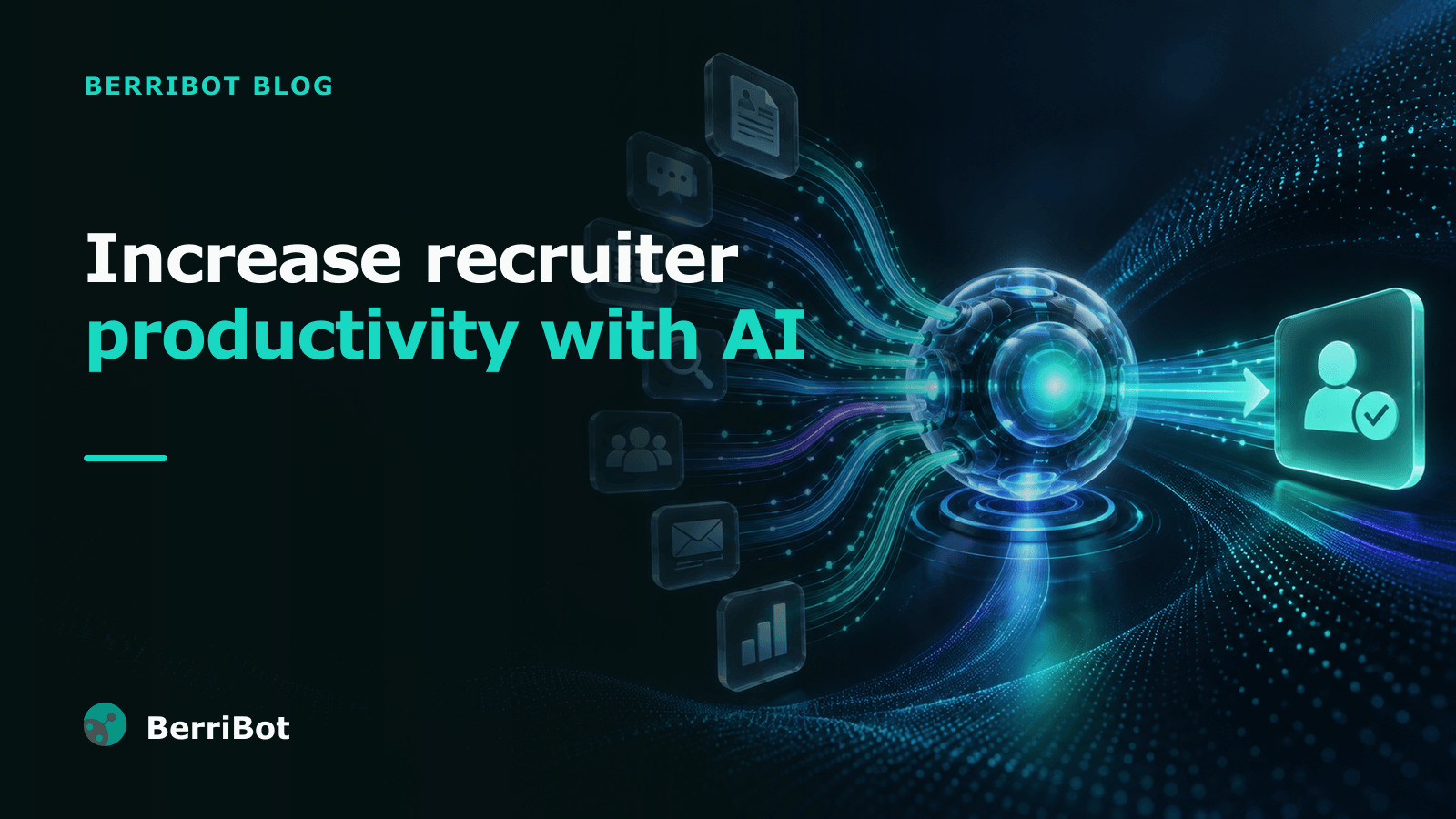
Berri 360 is BerriBot's unified agentic AI recruitment platform, and it runs the four outcome-based stages as one continuous workflow instead of four disconnected tools.
Multiple AI agents handle end-to-end hiring, and the hiring team steps in to make the final decision.
The platform analyses resumes contextually to shortlist top talent. It then contacts those candidates to ask screening questions, check availability and schedule interviews. That communication is fast, adaptive and human-like, which keeps candidates engaged around the clock and raises interview show-up rates.
The AI interviewer conducts consistent, unbiased interviews that evaluate technical, communication and behavioural skills at once. The interviews are proctored in real time to prevent interview fraud. Hiring teams receive detailed scorecards afterwards.
What should recruitment teams take away?
Focusing on hiring speed and application volume buries true candidate quality under administrative work and raises the likelihood of an expensive bad hire.
Outcome-based hiring evaluates candidates on practical job skills and expected deliverables instead of resume keywords. Assessing real performance capability before the interview improves quality of hire and reduces early turnover.
A unified platform automates screening, scheduling and proctored interviews at scale, which removes the administrative overhead and leaves hiring teams with the final decision.
Frequently asked questions
What is outcome-based hiring?
Outcome-based hiring is a recruitment strategy that evaluates candidates on their ability to perform a role's real responsibilities, rather than on how well their resume matches a job description. It measures whether someone can complete real-world tasks and meet defined job expectations.
How is outcome-based hiring different from volume-based hiring?
Volume-based hiring optimises for application quantity and fast fill times. Outcome-based hiring optimises for verified skill execution. The practical differences appear at four stages: contextual screening instead of keyword matching, multi-channel communication instead of slow administration, standardised assessments instead of unstructured interviews, and real-time proctoring instead of assumed honesty.
Why has keyword-based resume screening stopped working?
Keyword filters match exact text between a job description and a resume. Candidates now use generative AI to produce resumes tailored to pass those filters in minutes. The filter rewards vocabulary rather than capability, so unqualified applicants advance while qualified candidates who phrase their experience differently get rejected.
What does a bad hire actually cost?
A single bad hire drains lost team productivity, wasted onboarding time and repeated recruitment expense. 74% of employers admit to hiring the wrong person, and the cost is not recoverable once the candidate has moved through screening, interviewing and onboarding.
How do you assess candidates on outcomes rather than resumes?
Rewrite job profiles around what the person must accomplish in their first six to twelve months, screen resumes contextually for how skills were applied, run standardised practical assessments before human interviews, proctor those assessments in real time, and compare assessment scores against later performance reviews.
Does outcome-based hiring slow down hiring?
No. It moves evaluation earlier rather than adding stages. Structured assessment before extended human interviews removes the unqualified candidates who would otherwise consume interview hours, so time-to-hire falls even though evaluation is deeper.
Where does real-time proctoring fit into outcome-based hiring?
Assessment integrity is one of the four stages. If a remote test assumes candidate honesty, the score does not reflect competence, and the whole outcome-based approach collapses. Real-time proctoring verifies identity and monitors for unauthorised assistance so only genuine candidates advance.