



Answer in brief
Disclose your 90-day notice early, sequence interviews around a realistic joining date, and seek written approval before shortening your notice. Keep your last working day and new start date separate.
You can switch jobs with a three-month notice period, but plan around your actual last working day, not an early release you hope to receive. Tell recruiters your notice period on the first call, schedule interviews while you serve it, and negotiate any shorter exit with a handover plan. Confirm changed dates in writing before agreeing to join.
What Does a Three-Month Notice Period Mean in India?
It is the time between giving notice and your employment ending under your appointment letter and applicable policy. Check whether your documents say three calendar months or 90 days, when the count begins, and who confirms your last working day (LWD). Those details matter more than a general rule of thumb; notice terms and buyout options vary by employer and contract. An India notice-period overview describes common arrangements, but your own documents govern the practical conversation.
Before applying, read the clauses on resignation, leave during notice, payment instead of notice, garden leave and outside work. Ask HR to clarify anything ambiguous in writing. If you have not resigned yet, you can interview first; do not give notice solely because a recruiter says a role is likely to become an offer.
When Should You Tell Recruiters About Your 90-Day Notice?
Tell them on the first call and enter the accurate period on application forms. A realistic date is easier to plan around than a promised 30-day joining date that depends on approval you do not have.
Try: “My contractual notice is 90 days. If I resign on [date], my expected LWD is [date], so I could join from [date]. I can request an earlier release after agreeing a handover, but I would not want to promise that until it is approved.” If you are already serving notice, replace the estimate with your confirmed LWD. If a form offers only fixed notice-period choices, select the truthful one and use a comments field to explain any *approved* shorter date.
How Do You Sequence Interviews and a 90-Day Notice?
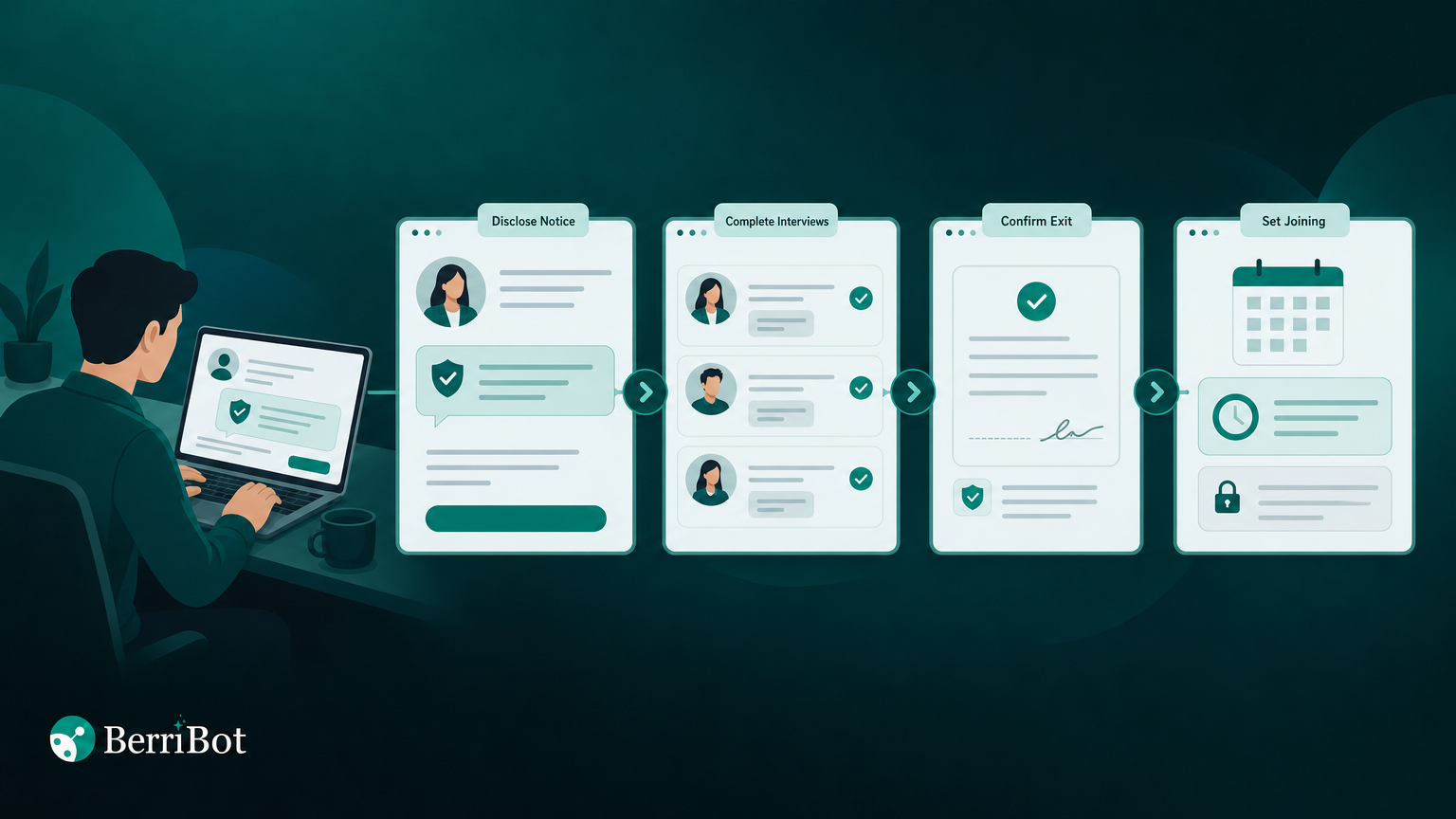
Start searching before you resign where possible, then work backward from a joining date the new employer can accept. Front-load screening and technical assessments, ask for the remaining interview stages early, and leave room for offer approval and background checks. If you are already serving notice, give recruiters your confirmed dates rather than starting the search over.
Use this 12-week switch map as an action plan, not a claim that 12 weeks equal 90 days. Twelve weeks are 84 days; if your notice is exactly 90 days, account for the remaining days. A three-calendar-month notice may end on a different date again.
When | Your move | Decision to confirm |
Before notice or weeks 1 to 2 | Interview, disclose your notice, and gather your contract terms. Once you resign, obtain acknowledgment and draft a handover plan. | Is the hiring team open to your realistic joining date? |
Weeks 3 to 4 | Complete documentation and successor shadowing; ask your manager whether an earlier LWD is possible. | Can leave adjustment or an early release be approved? |
Weeks 5 to 6 | Finish remaining interviews where feasible; request written notice-pay terms if needed. | Is there an offer with a workable joining date? |
Weeks 7 to 9 | Agree any approved LWD change, confirm the new date of joining (DOJ), and provide background-check documents as requested. | If early release is refused, will the new employer revise the DOJ? |
Weeks 10 to 12 and remaining days | Close the handover, return assets, settle exit requirements and request written proof of your employment end date. | Do the documented LWD and DOJ leave no overlap? |
The stages can move faster or slower than this map. Ask the recruiter what remains in the process and when a joining date must be finalized. If repeated first-round screens consume the time you have outside work, BerriTalent offers another route: one free Berri Certified interview creates reusable, verified skill evidence. Certified profiles can be routed to hiring managers at matching partners instead of repeating the L1 screen at each participating employer; certification does not guarantee an interview or a role.
Build verified skill evidence with BerriTalent
What Can You Do If a New Employer Wants You in 30 Days?
Ask what is driving the 30-day date, then offer a confirmed date and a conditional earlier option. Do not commit to 30 days while your employer still expects 90. The workable paths are an approved early release, permitted leave adjustment, or a notice buyout your employer accepts.
Start with your manager: show what work will be documented, who can take it over, and when you can complete knowledge transfer. Then ask HR whether eligible leave can be adjusted against notice. Leave encashment at exit is not necessarily the same as permission to shorten notice, so get the effect on your LWD confirmed. If neither route works, check whether your contract and employer permit payment instead of the unserved notice. A buyout is not an automatic right to leave early; it depends on the applicable terms and approval, as this employment-law discussion of notice buyouts explains.
If the answer is no, tell the new employer promptly: “My request for an earlier release was not approved. My confirmed LWD is [date], and I can join on [date]. Can we revise the offer’s joining date to match?” That is safer than assuming a verbal exception will appear later.
How Do You Calculate a Notice Buyout?
Calculate it using the salary component and daily-rate method specified in your contract or confirmed by HR, multiplied by the unserved notice days. Do not assume the base is your full CTC: an employer may specify basic pay, gross pay or another defined amount.
For example, suppose HR confirms that notice pay uses a ₹60,000 monthly basic salary and a 30-day divisor. If 20 days remain unserved, the illustrative buyout is ₹60,000 ÷ 30 × 20 = ₹40,000. That is a calculation example, not a standard rate or a promise that those days can be bought out. Ask HR to confirm the amount, payment process, revised LWD and exit documents in writing. If the new employer offers reimbursement, obtain its amount, conditions and payment timing separately in writing before deciding whether you can fund the buyout yourself.
Does Garden Leave Let You Join Your Next Employer Early?
No, not by itself. Garden leave generally means you remain employed and paid during some or all of your notice, even if you are told not to work. Being away from your desk is different from being released from employment. Ask HR for the actual employment end date and written permission before undertaking any other work; do not treat garden leave as an automatic early-release mechanism. Commentary on employee-mobility restrictions in India discusses the distinction between restrictions during employment and after it ends.
What Should You Check Before Joining Without Overlap?
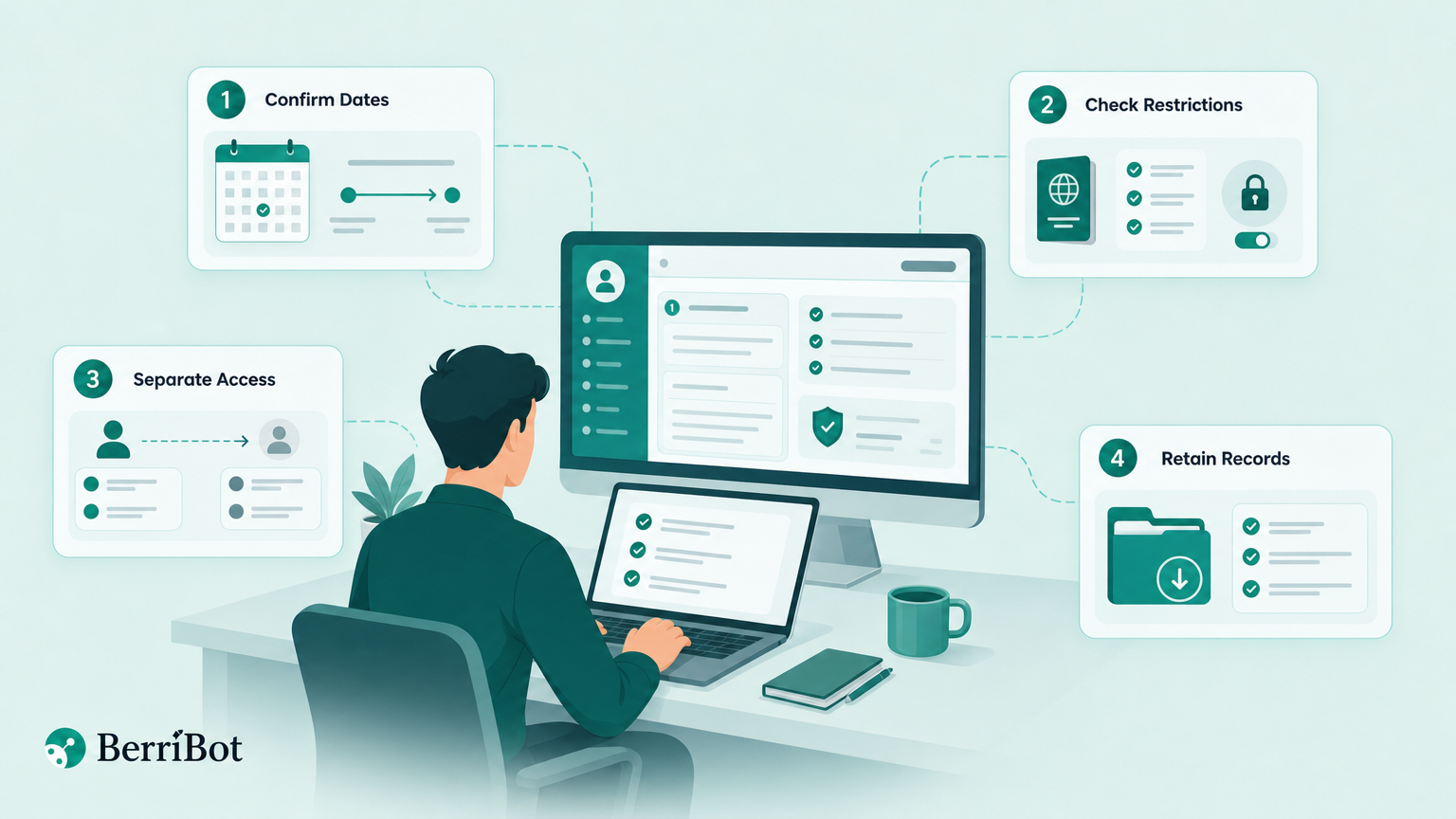
Make the dates and obligations verifiable before your first day at the new job. There is no single rule that makes every instance of parallel employment identical, but your contract, employer policy and applicable state rules may restrict outside work. Overlap can also create a dispute during exit or background verification; see this overview of moonlighting considerations in India.
1. Confirm Both Dates
Keep the resignation acknowledgment and written LWD confirmation, then make sure your offer records a DOJ after that LWD. If either date changes, notify the other employer before the change creates a conflict.
2. Check Work Restrictions
Review your appointment letter, outside-work policy and any garden-leave instruction. Do not begin onboarding work, billable work or other duties for the new employer while still employed unless you have checked the applicable requirements and obtained necessary written permissions.
3. Separate Access and Information
Finish the handover and return devices and access as directed. Do not move code, customer information, documents or credentials to a personal account or the new employer, even if you wrote them.
4. Retain Exit Records
Keep your resignation acknowledgment, approved LWD or release confirmation, asset-return proof and any relieving or full-and-final documents when issued. Share accurate dates during background verification, and ask what alternative proof is acceptable if a document is not yet available.
A post-employment non-compete is a separate question from working for two employers at once. Section 27 of the Indian Contract Act generally limits agreements restraining someone from exercising a lawful profession or trade after employment. It does not erase obligations concerning confidential information or settle every clause in your contract. If a restriction or disputed exit date could affect your move, seek advice on your specific documents rather than assuming it is enforceable or unenforceable.
What Should You Write to Request Early Release or a Buyout?
Make the request specific: propose an LWD, show how work will be handed over, and ask for a written decision. Speak with your manager first where appropriate, then send the relevant email to your manager and HR. Replace every bracketed field before sending.
1. Early Release Request
Subject: Request to revise my last working day to [date]
“Hi [name], following our discussion, I would like to request an LWD of [date] instead of [current date]. By [date], I will complete [deliverables], document [systems or processes] and run handover sessions with [person/team]. I can share a handover tracker and address outstanding questions before release. Could you and HR confirm whether this date is possible, including whether eligible leave can be adjusted against notice? I will continue to work to my current LWD unless a revised date is approved in writing. Thank you, [name].”
2. Buyout Proposal
Subject: Request for notice-pay calculation and revised LWD
“Hi [name], if an LWD of [proposed date] cannot be covered through handover or leave adjustment, could you confirm whether notice buyout is permitted under my terms? Please share the applicable salary component, daily-rate method, unserved days, amount, payment instructions and the LWD that would be recorded after approval. I will confirm before making any payment or changing my joining commitment. Thank you, [name].”
3. Joining-Date Negotiation
Subject: Confirming a workable joining date
“Hi [name], I remain interested in [role]. My current confirmed LWD is [date], so my reliable DOJ is [date]. I have requested an earlier release with a handover plan, but it is not approved yet. Can we record [reliable date] in the offer and revise it only if my employer confirms an earlier LWD in writing? Please also confirm how long the offer remains valid and whether any approval is needed if the DOJ changes. I will update you by [agreed date]. Thank you, [name].”
How Do You Keep an Offer Workable Throughout Notice?
Agree the joining date and offer-validity terms in writing rather than relying on a verbal assurance that the employer will wait. Ask the recruiter when the offer expires, whether the stated DOJ can be changed, what approvals a change needs, and which documents background verification requires. Check in at an agreed cadence, especially after an LWD decision; if the date slips, request an amended DOJ immediately instead of waiting until the scheduled start week.
While you serve notice, you can also see roles matching your experience. If applications are stalling before interviews, check where your résumé may be losing shortlists rather than treating the notice period as the only possible cause.
What Is the Safest Next Step?
Write down your contractual notice, confirmed or estimated LWD, and earliest approved DOJ. Use those dates in recruiter conversations, pursue a documented handover if you need an earlier exit, and keep interviewing without promising a date you cannot yet meet. This is general information, not legal advice; your contract, policy and applicable state rules may change the answer for your situation.
Interviews you can prove
Screening, interviews, and live identity verification in one platform. Built for high-volume technical hiring.
Book a demo