

Answer in brief
Candidate ghosting increases in slow, high-volume hiring processes. See how Berri Connect and Berri MasterMind solve it.
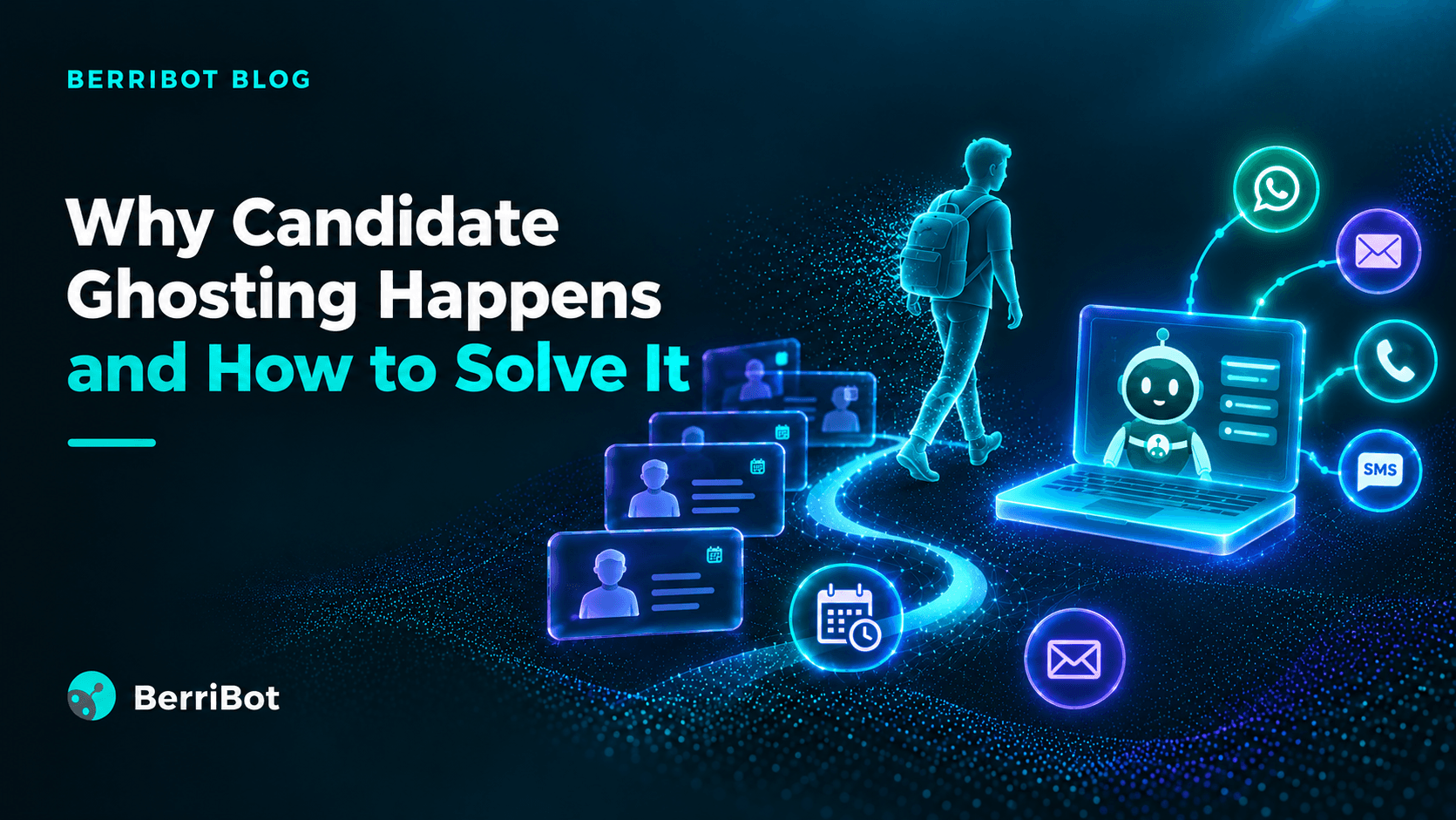
A candidate ghosting a company has several reasons, but one major reason is a delayed response from the company side. During this delay, the candidate might be interviewing with another company or evaluating a counteroffer from their current employer. In India alone, approximately 35% of job seekers say they have ghosted an employer. If employers are not responding fast in terms of, for example, conducting an interview or giving timely updates to candidates, they continue to face candidate ghosting challenges.
This blog covers the common reasons behind candidates ghosting a company and how Berribot's AI agents (Berri Connect and Berri MasterMind) help you solve it.
What are the Common Reasons Behind Candidate Ghosting?
The slow hiring process is one of the common reasons behind candidate ghosting. It just shows up in different forms, such as delayed communication, delayed scheduling, delayed interviews. Each delay gives the candidate a reason to ghost the employer.
Form of delay | What you see | What it says about your process |
Delayed communication | The candidate stops replying after the phone screen | Updates depend on a recruiter, who is busy and cannot manage consistent communication at scale |
Delayed interview scheduling | The candidate is not flexible with interview slots that are 2 weeks away | Interview scheduling depends on panel availability, which slows the hiring process |
Delayed interviews | The candidate stops replying 1 to 3 days before the interview | You rely on panels for interviews, so your time to interview is longer than other companies' |
Delayed rescheduling | The candidate is not committing to the suggested interview slot and giving reasons to reschedule | Again, rescheduling interviews depends on panel availability and manual coordination, which makes it hard to do |
Late or missing reminders | The candidate doesn't join the interview and sends no prior notice | Reminders are email-only, sent late or not sent at all. Your recruiters cannot send reminders to every candidate on the channel they prefer |
Behind all these reasons, candidates believe that walking away is free.
Indeed's US survey found that 94% of job seekers who ghosted an employer saw little or no consequence.
A candidate holding two offers thinks that they don't have any reason to call the slower employer and explain. They simply stop answering.
Candidate Ghosting in High-Volume Hiring
In high-volume hiring scenarios, the chances of candidate ghosting are high, because delays grow with the number of candidates. These delays come from:
Interviewer availability: An interviewer can only take so many interviews in a day, and they have other responsibilities to do. Coordinating multiple interviewers together to interview a candidate and repeating the same for thousands of candidates is physically exhausting.
Recruiter workload: At scale, it is a burden for recruiters to contact candidates, ask screening questions and keep them updated throughout the hiring process.
Time zones: Candidates and interviewers often live in different time zones. So recruiters have to extend their work beyond standard hours and follow up on long email threads just to schedule interviews.
Batch hiring: In campus drives and bulk hiring, companies hold interviews only on fixed drive days. A candidate who is available on Monday for an interview may wait a week or more for the next drive day, and other companies can make an offer in that time.
Berri Connect and Berri MasterMind automate these tasks and remove the delays that manual hiring can't.
How Does Berri Connect Solve Candidate Ghosting?
Berri Connect is an AI agent that solves candidate ghosting by automating interview scheduling and candidate communication at scale, which usually get delayed when done manually. It keeps the candidates engaged across the hiring process by giving timely updates.
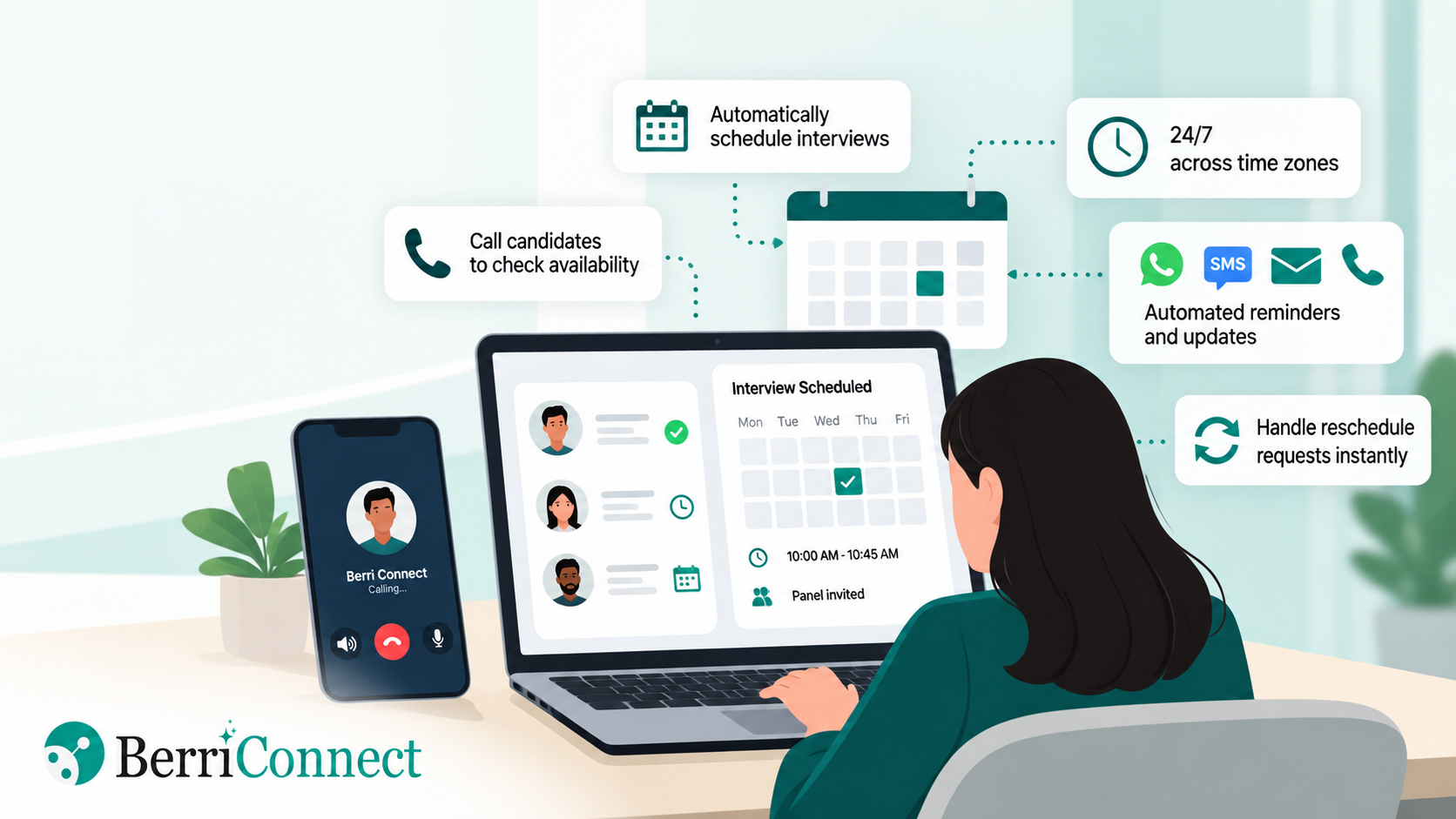
Key features and benefits:
Berri Connect calls the candidate to check their interview availability. It then automatically coordinates the panel’s and candidate’s calendars to schedule interviews. This reduces the delays due to scheduling conflicts that happen in the manual hiring process.
The AI agent is available 24/7, so candidates in any time zone get a faster response. Recruiters don't have to work late to follow up on email threads.
Automated reminders and updates go out on WhatsApp, SMS, email and voice call, so a candidate doesn't miss the interview because an email went unread.
It supports inbound callbacks and handles reschedule requests. In high-volume hiring, handling these kinds of requests in real time prevents candidate drop-offs.
It can initiate 10,000+ calls in a minute, so contacting thousands of candidates doesn't slow down during campus drives or bulk hiring.
Customers using Berri Connect see conversion rates over 80% and 2x higher interview show-up rates. Book a demo
How Does Berri MasterMind Solve Candidate Ghosting?
Berri MasterMind is an AI interviewer that conducts high-volume L1 interviews 24/7, so candidates can take interviews at their convenience, removing delays that make candidates look for interviews at other companies.
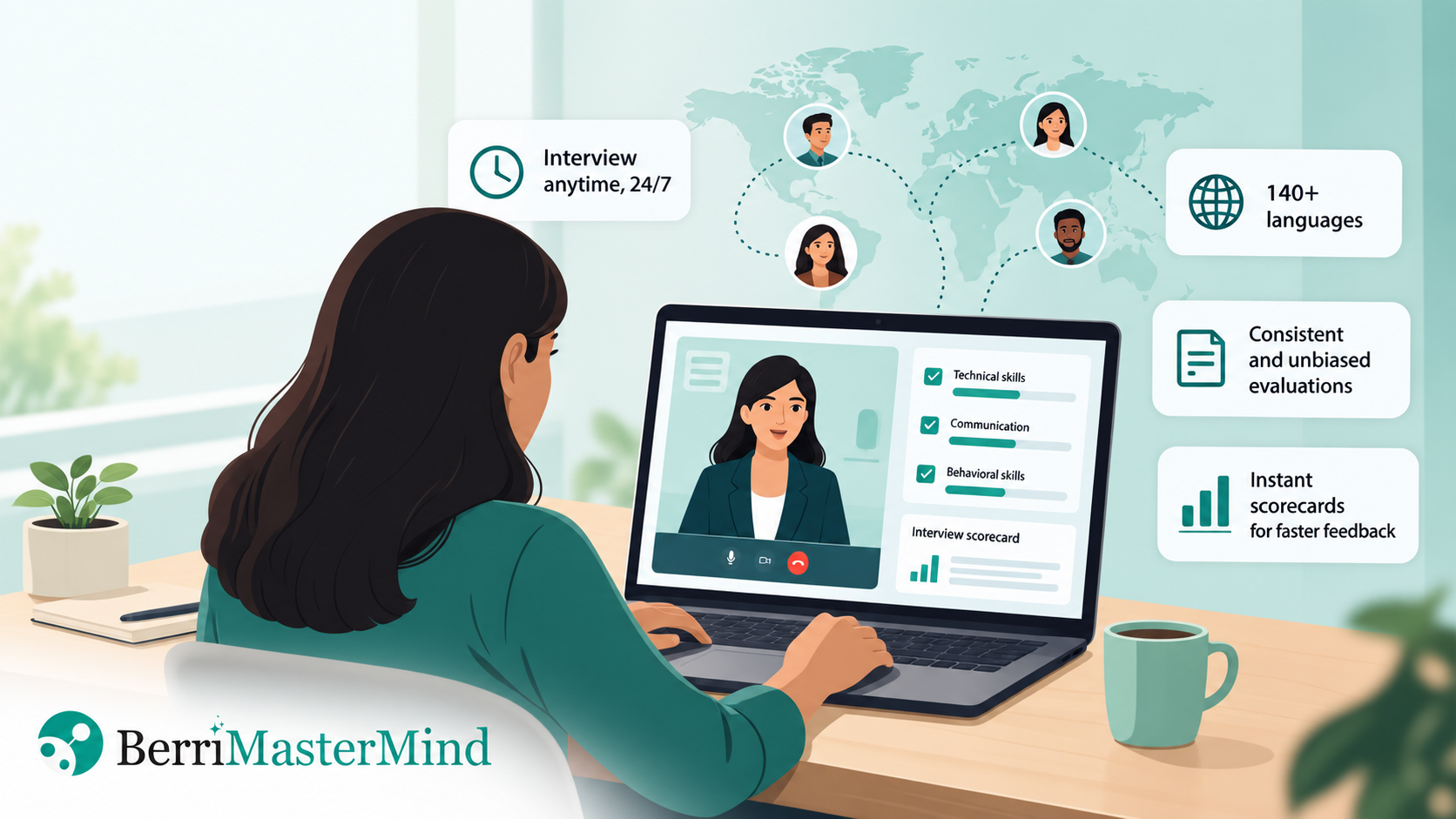
Key features and benefits:
Candidates can take interviews at any preferred time from the invite sent to their email. Delays due to panel availability and time zone conflicts are eliminated here.
The evaluations are in-depth and consistent across candidates. It reduces the biased scoring in human-led interviews, which affects the candidate experience. Candidate experience plays an important role in preventing candidate ghosting.
It supports 140+ languages. Candidates around the world can attend interviews in their preferred language. This puts the focus on the candidate's ability rather than how well they speak a particular language, which again improves candidate experience.
The interview scorecards are available after the interview. So recruiters and hiring managers can share timely feedback with candidates. This prevents candidates from waiting for a long time for updates.
Before our customers automated their L1 interviews, 40% of their interviews ended in no-shows. After automating their hiring process with Berribot, our customers see time to offer reduced from 25+ days to 10, recruiters save 9.5 hours per offer, and cost per hire drops by 78%.
Don’t lose top talent to a slow hiring process. Schedule and conduct interviews faster to prevent candidate ghosting. Book a demo
Frequently Asked Questions
1. What does candidate ghosting mean?
Candidate ghosting means a candidate stops responding to a company where they applied for a job. It can happen at any stage of hiring: after applying for a job, after accepting an interview, or even after accepting an offer.
2. Is candidate ghosting increasing?
Yes. Gartner links the increase to candidates keeping "one foot in the job market" even after saying yes. LiveCareer's 2025 reports found that 88% of HR professionals face candidate ghosting, and 1 in 4 US job seekers say they have ghosted a potential employer.
3. How should you respond to candidate ghosting?
Follow up within 24 hours on different channels, such as a WhatsApp message or a call, since the candidate may have missed your email. If they still don't reply, close the application politely and offer the slot to the next candidate. Then note the stage where they dropped off, because repeated drop-off at the same stage points to a delay in your process.
4. Should you blacklist candidates who ghost?
No. Keeping a record is reasonable, but most candidate ghosting happens because of delays in the hiring process, so fixing those delays is better than banning candidates.
5. Do automated interview reminders reduce no-shows?
Yes, especially when they are sent on multiple channels. Reminders prevent candidates from forgetting the interview, but they can't stop a candidate who has already accepted a faster offer.
Next step:
See how Berribot helps you interview candidates before they move on to other offers. Book a demo

Everyone is running AI interviews now
The only question left is whether yours is the version candidates will tolerate.
See ours