

Answer in brief
Candidate fraud detection software checks identity and interview-integrity signals during remote interviews, with human review before a flag affects a candidate.
Candidate fraud detection software for remote interviews checks whether the invited candidate is the person answering throughout the interview. It can flag identity mismatches, synthetic video and signs of outside assistance while the interview is underway. Recruiters should review the evidence before acting on a flag, alongside identity checks before the interview and background checks after an offer.
A candidate can present an ID before a remote interview and still receive help or hand the conversation to someone else during it. If the mismatch goes unnoticed, a hiring team may spend time onboarding and replacing someone who cannot do the work. In IT services, the consequences may also reach a client project.
How Widespread Is Candidate Fraud Now?
Candidate fraud is a measurable risk in remote hiring, although no single survey describes every employer’s exposure. A Gartner survey of 3,000 job candidates found 6% admitted to some form of interview fraud, according to Gartner’s 2025 press release.
Creating a convincing identity can also require little time. Palo Alto Networks’ Unit 42 showed that a single inexperienced researcher created a synthetic job-interview identity in 70 minutes in 2026. The demonstration does not establish that the identity passed a live interview.
Proxy interview services, where someone attends on an applicant’s behalf, are openly advertised. As another measure of the wider identity-verification problem, LexisNexis Risk Solutions reported in 2026 that one in every 100 identity-check failures involved a deepfake document, image or liveness video. That figure concerns failed identity checks, not the share of job applicants using deepfakes.
An interviewer may notice an obvious substitution but cannot reliably establish identity from appearance alone. A repeatable verification process gives the hiring team evidence to examine rather than asking the interviewer to make that judgment unaided.
What Are the Limitations of Traditional Proctoring Tools?
Traditional recorded-interview review can identify concerns after an interview, but it cannot prompt a check during the conversation. Live proctoring can flag a concern while the candidate and interviewer are still present. Neither method makes every flag conclusive.
Method | When the hiring team gets evidence | Best use |
Post-interview recording review | After the conversation ends | Reviewing completed interviews and preserving evidence |
Live interview verification | During the conversation | Checking identity continuity and investigating a flagged event promptly |
A tab change may reflect an interview instruction, and a pause may simply be time spent thinking. Recruiters need the surrounding evidence and a human review before a flag affects a candidate.
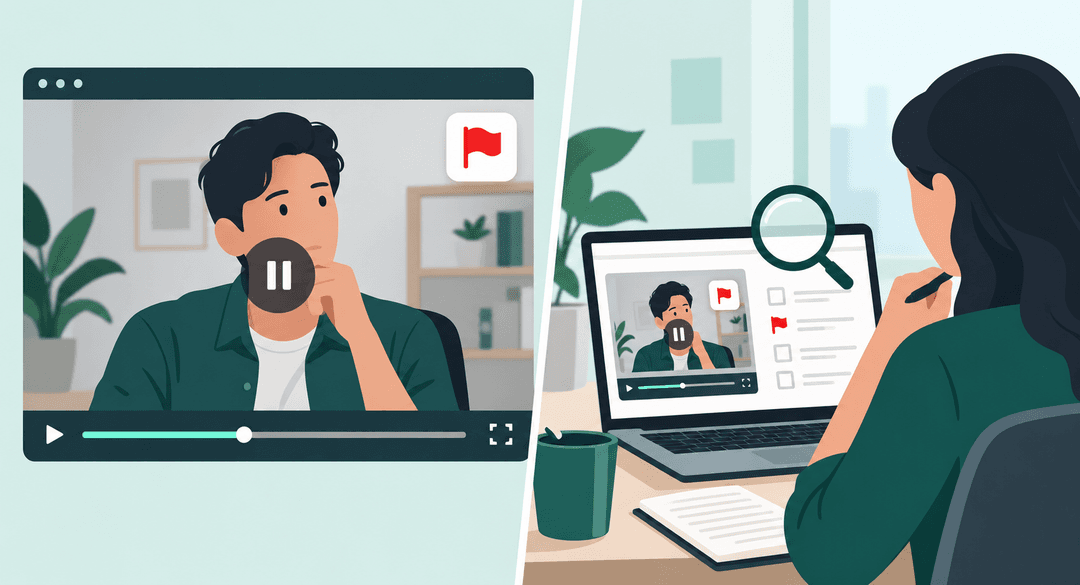
Berri Proctor supports live interview verification and post-interview analysis. Teams can use the two modes for different interview workflows rather than treating recorded review as obsolete.
What Do Background Checks Actually Verify?
Post-offer background checks verify claims such as education, employment history and criminal records; they do not establish who answered a remote interview. Matching an applicant’s ID before the call also leaves a gap if another person takes over or helps during the conversation.
For a Recruitment Ops Lead, timing matters. An offer may already have triggered joining plans and client staffing updates by the time a discrepancy surfaces. Interview-stage verification addresses a different question from background screening: was the invited candidate the person who gave the answers?
How Does Berri Proctor Detect Candidate Fraud During Live Interviews?
Berri Proctor checks candidate identity and interview-integrity signals during a remote interview, then provides evidence for human review. The invited candidate’s face and voice are matched to their ID at the start and throughout the session.
Verify identity and liveness. Berri Proctor validates a digital ID and uses 3D liveness, a check that the person on camera is physically present rather than a recording or synthetic face.
Check the interview environment. Environmental scene analysis looks for second screens, extra voices and off-camera help. A smart-glasses risk is worth discussing with any vendor, but a general scene-analysis claim is not proof that a product detects every device.
Examine session signals. Lip-sync checks and browser or tab-change monitoring can surface events that warrant closer examination. A flag does not establish misconduct on its own.
Review the evidence. A person reviews every Berri Proctor integrity flag before it affects the candidate. Recruiters retain the hiring decision.
Berri Proctor also accepts recordings from Zoom, Microsoft Teams, Google Meet and other interview tools for post-interview analysis. A BerriBot analyst confirms each post-interview result as Pass, Fail, Doubtful or Invalid; if the analyst and automated conclusions differ, both appear in the report.
What Compliance and Vendor Questions Should Buyers Ask Before Choosing a Proctoring Tool?
Buyers of interview proctoring software should check biometric-data handling, candidate consent, retention and human review before comparing detection claims. India’s Digital Personal Data Protection Act, 2023, and the DPDP Rules, 2025, began coming into effect on November 14, 2025; obligations have phased commencement. For EU hiring, biometric data used to identify a person falls under GDPR Article 9’s special-category rules. Ask legal counsel which obligations and assessment requirements apply to each hiring location.
BerriBot states that biometric processing requires explicit consent and that retention is documented. Its Trust Center lists SOC 2 Type II and ISO 27001. Buyers should still verify the controls, contract terms and candidate notices against their own policies.
Use the same questions with every shortlisted vendor:
Which identity, liveness and interview-integrity methods does the product use? What independent testing, if any, supports its accuracy claims?
Does live verification work in the existing interview workflow, or must candidates and interviewers move to a different room?
Can the vendor review both live sessions and recordings from tools such as Zoom or Teams?
What biometric and session data is collected, who can access it, and when is it deleted?
Who reviews a disputed flag, what evidence can the candidate challenge, and who makes the final hiring decision?
A buyer should request a demonstration using the interview formats and exception cases their team actually handles. Clear answers about false flags and escalation are more useful than an accuracy figure without its test conditions.
What Is the Bottom Line on Candidate Fraud Detection Software for Remote Interviews?
Candidate fraud detection software for remote interviews closes the identity-check gap during the conversation, when hiring evidence is being gathered. Pre-interview ID checks and post-offer background screening remain useful, but neither confirms identity continuously while answers are given.
Berri Proctor combines live identity checks, integrity signals and human review. Evaluate its reports, consent process and handling of disputed flags against your hiring policy before rollout.
Frequently Asked Questions
What is candidate fraud? Candidate fraud is misrepresentation during hiring, such as false credentials, a proxy attendee or a synthetic identity. AI-generated answers may raise an integrity concern when their use breaches the interview rules disclosed to candidates.
What is the process of fraud detection? Fraud detection in remote hiring combines an ID check, verification during the interview and relevant background checks after an offer. A recruiter reviews interview flags and decides what further investigation is needed.
How can employers detect AI-driven fraud in interviews? Employers can use identity matching, 3D liveness and lip-sync checks to investigate a possible synthetic or substituted attendee. Berri Proctor also records relevant interview-integrity signals for human review.
Why isn’t a background check enough to catch interview fraud? A background check can examine a candidate’s stated history after an offer. A background check cannot prove that the same person answered questions throughout an earlier remote interview.
Does live proctoring interrupt or feel intrusive to candidates? Berri Proctor runs verification checks during the interview, but candidates may have different views about biometric checks. Explain what is collected, obtain explicit biometric consent and give candidates a way to ask questions or contest a flag.
Still have questions? Talk to us.
Humans catch deepfakes 55% of the time
That is a coin flip. Spotting them is a machine's job now.
See the detection layer